LOVE STORIES YOU WON’T FORGET
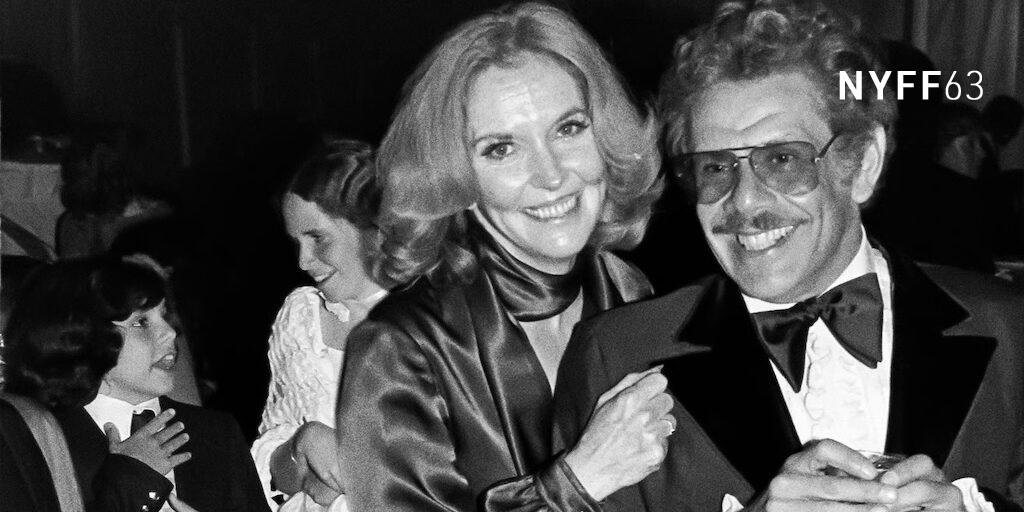
The Upper West Side Manhattan apartment of the Stiller family is the starting point for this amazing and deeply moving documentary. Jerry Stiller and Anne Meara lived there. He, a former army officer turned comedian; she, a born actress. They met on stage, and from then on decided to get married, have children, become a comedy duo, and consequently, spend their entire lives together. Their children, Amy and Ben, are the ones who raise the questions, assumptions, and assertions surrounding the couple, and there are quite a few of them.
The Stiller & Meara duo’s gags consisted mainly of marital spats, where they would present a situation and respond to each other. Reality transformed into fiction, invented, exaggerated, and effective. Stiller was usually the one who started the joke, and Meara would deliver the punchline with virtuoso precision.
Jokes like this:
Jerry: I’d like to introduce you to Meara, the mother of our two children.
Meara: I’d like to introduce you to Jerry, the father of one of our two children.
Following this logic, Stiller and Meara joked in their acts about their heritage and religion—he Jewish and she Irish—a formula they shared with Ed Sullivan’s marriage. Sullivan, the iconic host of The Ed Sullivan Show (now replaced by The Late Show), ensured their continued presence in a segment of the program, especially after experiencing firsthand the very differences the duo laughed at. Thus, the Stiller couple gained considerable popularity with a generation; the show was watched by no fewer than millions of Americans.
Ben Stiller directs the documentary and is burdened by a significant concern: trying not to repeat certain mistakes (like being absent due to film sets) he made as the son of actor parents with his own children. Stiller was married to actress Christine Taylor, with whom he shares two children, including Ella, who is an actress. He also emphasizes his personal growth, the best evidence of which is that, even after their separation, he chose to spend the pandemic with Taylor and their children. Ben interviews Taylor, perhaps one of the film’s greatest strengths, where she demonstrates composure when discussing their family’s future and understands Ben’s perspective now.
The sale of the apartment where his parents lived—who passed away five and ten years ago, respectively—serves as a catalyst, thanks to the objects found (photographs, cassettes, letters) that lead him back to the past, to memories and nostalgia, but also to a deeper understanding of his parents and their relationship. As a child, Ben lacked the capacity for such analysis.
Each object found (Jerry kept everything), like pieces of a puzzle, piece together a story previously unknown to their children. Like in The Bridges of Madison County, there are steamy love letters, conversations revealing the couple’s inner anxieties, and videos showing a young Ben’s discomfort, revealing that he already sensed his mother’s alcoholism.
Ben and Amy ask themselves:
Did they love each other equally? Was one more talented than the other? What did each sacrifice to work together instead of alone?
The documentary states that Anne had a natural talent for acting; it came easily to her, and in improvisation, she responded ingeniously on the spot. But due to her comedic success, she postponed what truly interested her: theater acting. Jerry, on the other hand, was more structured. He learned his lines, which was difficult for him, and this kept him close to Anne. On stage, he couldn’t exist without her. Jerry felt devotion and an undeniable love for the woman who, years after her death, he confessed to being an incredible woman, the most wonderful woman he had ever known.
Ben then enlists the help of the couple’s friends to describe his parents. Among them is Christopher Walken. The Stillers didn’t always have it easy, both financially and in their daily lives as a couple. They had to move to Los Angeles for new job offers, specifically for television programs or films like Jack Smight’s Airport 1975 and Joseph Sargent’s The Taking of Pelham 123. With moves and regional separations in between, there was a time when Meara lived in New York and Jerry in Los Angeles. This is where Ben and Amy remember that period as difficult and marked by a great need for both of their parents.
The time came to end the acting duo, and both Anne and Jerry found solo work. Jerry may be remembered for his role as George Costanza’s father on Seinfeld. Anne, for appearances in Lovers and Other Strangers, as the woman who assaults Will Ferrell in Zoolander, and many more, mostly in theater. The film shows that individually they faced all their fears, both acting-related and personal, and overcame them. Anne used comedy as a weapon, sometimes exposing her inner feelings. Jerry, more conscientious, never let Anne down in front of an audience, even during their confrontations. Jerry’s gaze says it all: he loved her madly.
If there’s one thing to highlight about Ben Stiller’s film, beyond his personal openness and the sharing of his most intimate memories, it’s the love we perceive Ben and Amy received in their childhood. It’s moving and shows that beyond the difficulties in their relationship, the arguments, or whatever else came their way, that love was documented. Scenes like the couple greeting their parents from their performances or interviews, or showing them playing and missing notes on the violin—for their parents, it was a perfect melody.

(Estados Unidos, 2025)
Directed by: Ben Stiller. With: Anne Meara, Amy Stiller, Ben Stiller, Jerry Stiller, Christopher Walken. Produced by: John Lesher, Lizz Morhaim, Geoffrey Richman, Ben Stiller. Lenght: 97 minutos.